“I thought that because I wasn’t using dialogue, I didn’t need to record any audio. That was a mistake. I realised my edit severely lacked sounds and that I needed to start looking for music online.”
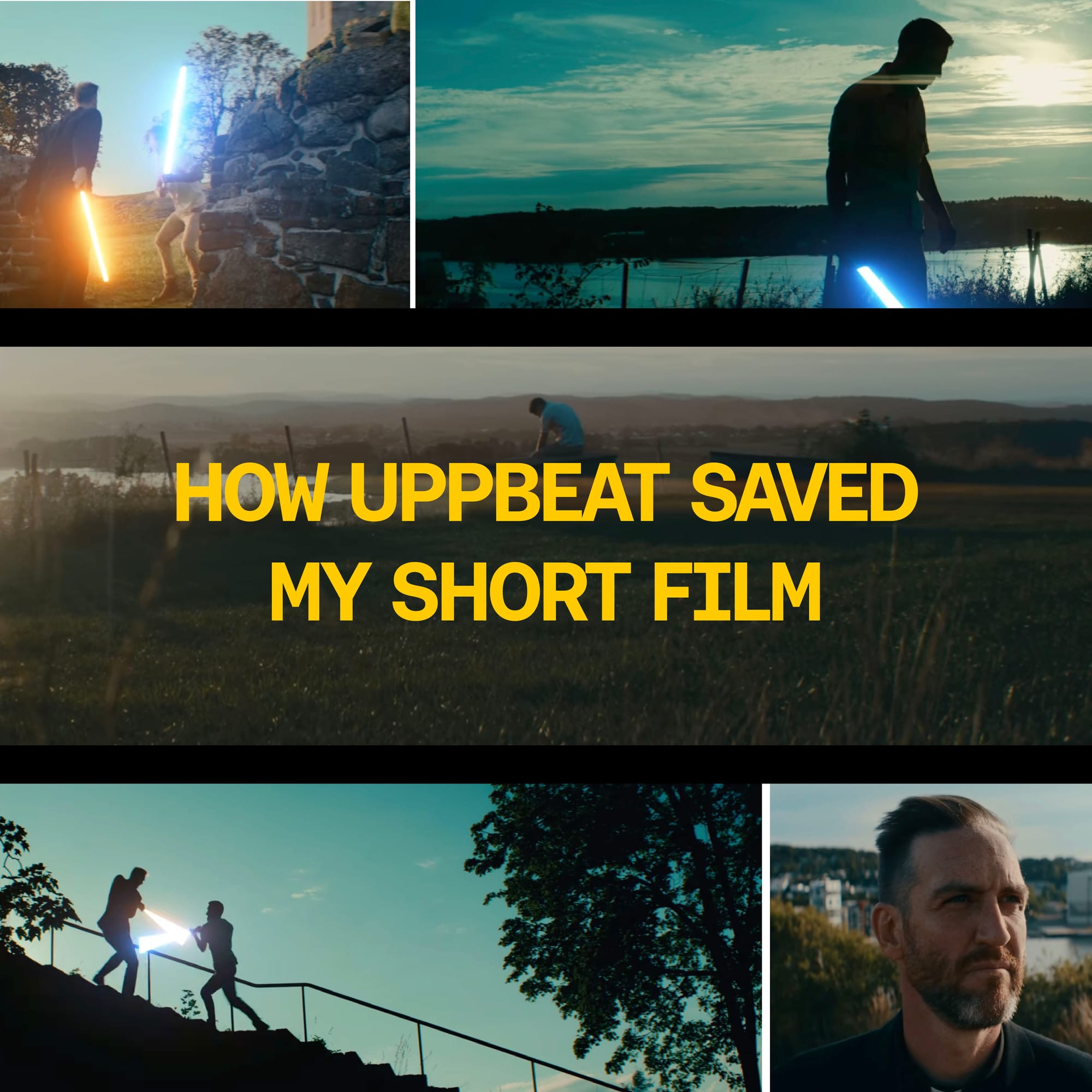
Midway through making his sci-fi short film Ruins Ignite, filmmaker Tomas Pollen Stavik hit upon a problem – a lack of sound. With no dialogue to lean on, music and sound effects had to carry every scene. And because Stavik wanted to submit his film to festivals, his audio had to be cleared for public screenings too.
That’s when Tomas came across Uppbeat’s world-class catalog of royalty-free music and started rebuilding the film’s soundtrack from the ground up. In this interview, he explains how he found high quality sound effects, layered them to create original sci-fi sounds, and found music without the licensing stress. The result was a film Tomas could be proud of.
Tomas Pollen Stavik is a Norwegian filmmaker and the director of Ruins Ignite, a 2025 short film that's gone on to screen at festivals. He shares his process, from camera tests to color grading, on his YouTube channel, with more of his work available on his personal site and IMDb profile.
- Lesson 1: Rebuild your sound in the edit
- Lesson 2: Layer your own sound effects
- Lesson 3: Be smart about finding the right sounds
- Lesson 4: Prioritise high quality audio
- Lesson 5: Avoid copyright issues from the start

Lesson 1: If you skip sound on set, you end up rebuilding your film in the edit
Tomas went into production thinking he didn’t need to worry too much about recording audio. In the edit, that choice caught up with him fast: “This is purely a no dialogue film so I didn’t record any audio. I ended up using some of the audio from the internal mic on the camera, which is not good quality.”
Tomas: “But then I was lacking smaller sounds that you don't really think about when you're watching a film too. Things like walking or when you move your shirt, there's a sound of the shirt moving.”
The bigger issue wasn’t just quality. When you’re relying on camera mic audio, everything you do in post production makes the problems louder too. For a film headed toward festivals, that kind of thin, messy audio pulls attention away from the story and makes the whole thing feel less finished.
Once Tomas accepted he needed more sound across the film, he started filling the gaps with everyday effects that most viewers never consciously notice.
Tomas: “I found that I needed to actually have some sound effects here on regular things that you take for granted.”
Once Tomas accepted he needed more sound across the film, he pivoted into rebuilding the scene-by-scene realism with foley sounds and everyday effects, using Uppbeat to find variations that actually matched the action on screen rather than forcing one clip to work. You can see how audio can transform your next edit in our guide to using sound effects.
Key takeaway
If your edit feels flat, start by adding the small real-world sounds your audience expects to hear. Use a few variations of each effect until it fits the moment, then build up from there. Whatever environment you’re looking to create, Uppbeat’s sound effects library has you covered.

Lesson 2: When you can’t use an iconic sound, build your own
A big part of Tomas’s inspiration came from those iconic lightsaber moments in Star Wars where sound does more than just sell the action, it tells you exactly what you’re looking at. He wanted that same instantly recognisable energy in Ruins Ignite and tried to take the most straightforward route by asking for permission to use the real thing.
Tomas: “I sent an email to Lucas Film to just ask, can I use them? The response was that they're copyrighted, you can't use them. I was pretty upset because the lightsaber is so iconic, you hear the sound and you instantly know what it is. So my next question is how do I make something which is similar?”
Instead of stalling the film or hunting for a risky replacement, Tomas pivoted into building his own sci-fi soundscape from scratch by stacking smaller sounds together until they became something new.
Tomas: “I found that combining a lot of sound effects worked and there was plenty to choose from in the Uppbeat library. There were electrical discharges and humming, lots of options I could mix into something that actually worked.”
And crucially, it meant the film could move forward without any question marks around licensing.
Key takeaway
When an iconic reference is off limits, use it as a blueprint rather than a shortcut. Layer a few simple sound effects into one effect and shape them until they feel like they belong in your world. This way you get the vibe, without copying the original.

Lesson 3: Use smarter searches to find the right sounds faster
Tomas found that a lot of the grind in sound design is simply trying to describe what you can already hear in your head. When you’re finishing a film to a standard you can submit, getting stuck in search loops is an easy way to lose momentum.
What Tomas found is that the problem is often the search term itself, especially with sound effects where a word might bring up something completely different to what you meant.
Tomas: “Using synonyms was the thing that finally made search work for me. If one word didn’t bring up the sound I was thinking of, I’d try a different word that means the same thing. With sound effects it’s easy to ask for a whoosh, for example, and end up getting something completely different to what you want.”
Music had a similar friction point for him. He knew the tone he wanted for Ruins Ignite, but he didn’t want to get trapped in endless browsing, or settle for a track that felt cheap.
Tomas: “I didn't want to use cheesy music that you get in low-budget action movies. From the start of my edit, I was worried about how I’d find the soundtrack I was looking for, this adventure music that I wanted.”
What helped was treating one good music find as a starting point, then using discovery tools to search for similar tracks instead of starting from scratch every time.
Once that search friction went away, Tomas could spend his time where it actually mattered – the edit. Finding the right sound effects and music faster meant more energy and space to focus on pacing, tone, and getting Ruins Ignite feeling ready to submit.
Key takeaway
When you hit a search wall, change your approach instead of pushing harder. Use a few synonyms for sound effects, and use one track you like as a ‘seed’ for music searches so you can shortlist quickly and keep the edit moving.

Lesson 4: Achieve award-ready polish with high quality audio
As Tomas pushed Ruins Ignite toward a festival-ready finish, he realised the edit needed a lot of tweaking to make audio sit properly in each scene. That’s where Uppbeat helped, because the files were clean enough to handle all that shaping and layering while still sounding polished.
That flexibility mattered because he wasn’t building scenes with one or two effects. A lot of the final sound design came from stacking multiple layers and mixing them into one coherent result.
Tomas: “There’s a lot of scenes where I’ve got like ten sound effects on top of each other, but they’re combined and mixed properly, and it really works.”
This level of detail matters when you’re making a film on next to no budget. Clean, flexible audio can be the difference between a short film that sounds homemade and one that feels genuinely award-ready.
Key takeaway
Pick source audio that can handle being pushed in post production. Use clean files so you can alter the sounds you use confidently and make the final result cohesive.

Lesson 5: Clear music and sound effects early so you can submit to festivals with confidence
As Tomas was trying to get Ruins Ignite over the line as a festival submission, the licensing side of sound stopped being a background worry and started being a real blocker. He’d been through the early anything goes internet era, but he’d also seen how quickly that catches up with you once platforms start enforcing copyright properly.
Tomas: “In the 2000s there was a lot of illegal downloading. In the back of your mind there was always a question of, can I use this, am I allowed? At first on YouTube it didn’t really matter, but after a while you started getting copyright strikes. I ended up putting a lot of time and effort into finding music I could actually use.”
With festivals in the plan, the stakes went up again. It wasn’t just about avoiding a strike, it was about being able to screen the film publicly without that lingering question mark.
Tomas: “I knew I was going to send it to festivals, so there would have to be legal talk about public screenings and all that. It wasn’t something I was looking forward to tackling, so I was postponing it.”
Uppbeat gave Tomas peace of mind. Once he knew his music and sound effects were properly cleared, he could stop delaying the hard part and finish Ruins Ignite.
Key takeaway
Treat licensing as part of the creative process, not paperwork at the end. Download royalty-free music and sound effects that are safe to use so you can lock your edit with confidence and submit without last minute replacements.

Create award-worthy videos with Uppbeat’s library
For Tomas, the turning point with Ruins Ignite wasn’t one perfect track or magic sound effect. It was being able to fix the missing real world details, build original sci-fi sounds through layering, and find music without the worry of license issues.
If you’re finishing a film and the sound is the part you keep postponing, take this as your sign. Open Uppbeat’s sound effects and royalty-free music libraries and start with one scene you know feels empty. Look for smaller sounds first, then use layering and discovery tools to build towards a soundtrack you can confidently publish. Or even submit for festivals and awards like Tomas.