“It’s really easy to get caught up in cool transitions or making things look nice. But if there’s no story behind your video, people get bored quickly.”
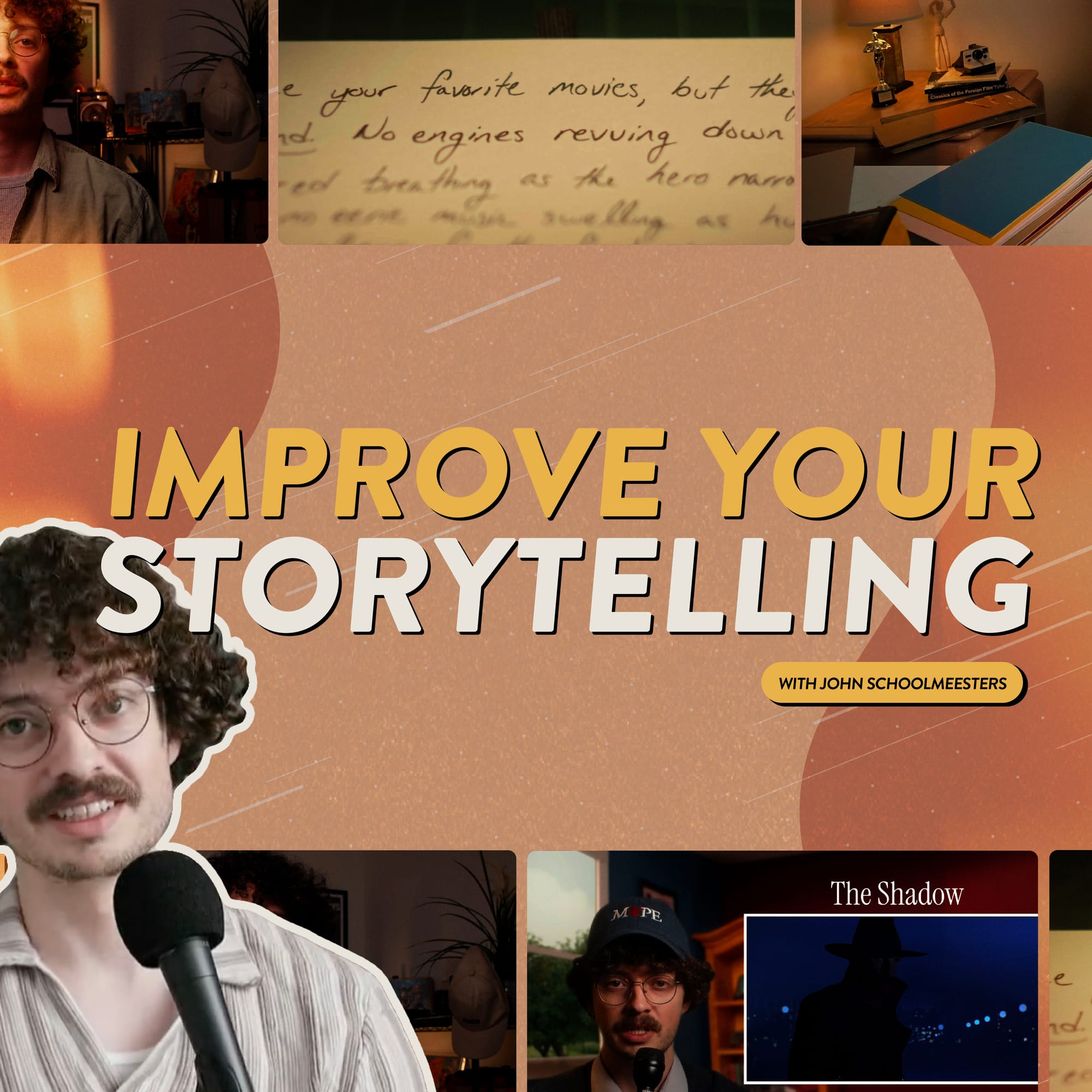
Filmmaker John Schoolmeesters knows that a good story can keep viewers hooked. From documentaries on the history of cinema to his short films and tutorials, John’s edits always feature clear narratives crafted to capture the audience’s attention. It makes for content that’s easy to follow and sticks with viewers long after they’ve watched it.
In this interview with Uppbeat, John shares how he approaches storytelling, from the planning stage right through to creating emotion in the edit. If you want your content to stick with viewers, this is where to start.
YouTuber John Schoolmeesters is a filmmaker known for his cinematic video essays and thoughtful storytelling. His channel blends film-inspired visuals, creative colour grading, and in-depth narrative structure, making him a go-to for creators who want to improve their craft.
- Focus on story over style
- Map out your narrative first
- See how your edit can evolve your story
- Aim to make your audience feel something
- Keep your story easy to follow

1. Focus on your story over style
Great visuals might pull viewers in, but it’s the story that keeps them watching. For John, that means focusing on the emotional connection you make with viewers, not just how the video looks.
John’s videos often explore niche topics and creative profiles, but what makes them work is the emotional thread running through them. Take his deep-dive on VistaVision – John draws viewers in with a story about how a recent trip to the cinema inspired him to explore the topic in more detail. He puts more emphasis on connecting with his audience in this way than flashy visuals or gear.
JS: “The reason people watch your videos is because they feel a connection to you and the ideas you share. Creators on platforms like YouTube can feel so much more real and accessible to their audience than a TV show does.”
John also cautions against letting stylistic choices – like a specific grade, transition or aesthetic – become the main focus of your content. The idea, not the look, should be in control.
JS: “I try not to let visuals take over the direction of my video. Allowing the story to unfold while I create is a lot better than thinking I really want to make a video that has a certain effect in it.” In other words, style should serve the story, not distract from it.
John’s Key Takeaway:
You can have great visuals, but if there’s no story behind them, people lose interest. Story is what makes your work stick.

2. Map out your story before you begin filming
Good storytelling starts long before the camera rolls. John believes you should make a plan for how your video is going to grip viewers, especially when you’re tackling complex topics.
JS: “Planning is a vital part of telling a good story. When you're dealing with something detailed, it’ll feel overwhelming to work through if you don’t plan it out. Purely because there are so many things that happen within your story.”
You can see how much planning matters to John in his video on the history of IMAX. He breaks down a complex topic into clear, easy-to-follow sections that guide the viewer through the story. That thoughtful approach comes from his time studying film at college, where he learned just how valuable pre-production can be, not just for staying organised, but for giving yourself the space to be creative when it counts.
JS: “Taking time in pre-production is essential if you want a smooth process, one that gives you space and time to make off-the-cuff decisions and try new things. When you have everything planned out as much as it can be, you give yourself extra creative freedom.”
Planning doesn’t mean scripting every second, but it does mean knowing the core idea you’re building around. A plan means you’re far less likely to find yourself lost in the edit, trying to combine pieces of footage that don’t quite work together.
JS: “I focus on making sure my story is really strong before I even start setting up my camera. It means I have an easier time later on and don’t have to try and piece something together in the edit.”
John’s Key Takeaway:
Plan your story in advance to give your video structure. You can always adapt later, but having a roadmap helps you focus on the story you want to tell.

3. Be open to evolving your story in the edit
Even with a solid plan in place, John sees editing as the part where the story really comes together and where new ideas often start to take shape.
JS: “Having your story planned out in advance gives you space to make natural, in-the-moment decisions when you’re editing. You might be moving footage around and realise certain parts work better somewhere else.”
It’s often in the edit that things can unexpectedly click. That might be an improvised moment you didn’t plan, or a creative decision that reshapes the pace or tone. Being open to those changes, John says, is key to making the story work on screen.
JS: “The story doesn’t always evolve, but a lot of the time it does shift based on what footage I end up with or what feels right once I’m piecing it together.”
While planning is important for creating a clear narrative, John notes that being too rigid can hold you back. Instead, let your edit guide your story.
John’s Key Takeaway:
Planning gives you structure, but don’t be afraid to make creative choices in the edit that improve the story. That’s often where the video really comes to life.

4. Create content that makes people feel something
At the heart of great storytelling is emotion. John’s found that the best content inspires emotion in viewers, whether that’s through curiosity, excitement, nostalgia, or connection. And the best way to resonate with your audience is to create content around something you care about.
That connection starts with you. When you love what your content is about, your passion for the subject will bring energy to the edit. This isn’t just in the way you speak, but in the tone, structure, and rhythm of the video itself.
JS: “Follow your own excitement. Having that interest and passion up front really helps to elevate your video. If you're excited about a topic or an idea, it's going to show through when you tell that story.”
And when that excitement isn’t there, your audience can feel it too. John’s quick to point out faking it rarely works.
JS: “People can recognize passion and excitement pretty easily – but also when someone's not interested in what they're talking about. If I felt like I was faking it in a video, I wouldn’t expect people to keep watching. So if something’s no longer resonating with me, it probably won’t resonate with others when I talk about it.”
When you're not genuinely invested in what you're saying, your audience will feel disconnected and stop watching. That’s why John always comes back to one thing, create something that genuinely interests you.
John’s Key Takeaway:
Start with stories that excite you. If it matters to you, there’s a good chance it’ll matter to someone else too.

5. Keep your story clear and simple to follow
When it comes to storytelling, John believes the best videos are often the simplest. A clear, focused story is that much easier for viewers to get into, making it more likely they’ll watch your video through to the end.
John considers titles and thumbnails early in his creative process, but not solely as a tool to capture attention. They help him pinpoint the main focus of his video, even before he’s begun crafting the narrative.
JS: “Recently I’ve started thinking earlier about how my title and thumbnail tie into the story I’m telling. It’s helped me refine my ideation process and work out which ideas will actually make a good video.”
Take John’s video The Giant History of Film Miniatures. The title does a lot of the heavy lifting – it tells you exactly what to expect and pulls you in right away. When your story is clear from the start, everything else falls into place more easily. But if you’re juggling too many ideas in one video, things can feel bloated and hard to follow, both for you and your audience.
JS: “I try not to make hour-long videos that are crazy in-depth or cover too many different concepts. Not only is it hard for me to make a video that long, but it can be daunting for some people to watch.”
Whether you’re planning a short film, tutorial or video essay, a focused story with a simple structure will always have more impact than something that tries to do too much at once.
John’s Key Takeaway:
Clarity is everything. If your video’s idea is easy to explain, it’s easier to make, and much more likely to connect with your audience.

Let the story lead the way
There’s no single formula to telling a great story. But as John shows, clarity, emotion, and curiosity will take you further than any new camera or clever edit. By focusing on what matters to you, planning ahead, and letting your edit shape the final version, you give your audience something they can truly connect with.
If you’re ready to bring your vision to life, the next step is making your gear work for you. In our interview with John on choosing the right equipment, he shares how to make smart decisions that actually support your storytelling.