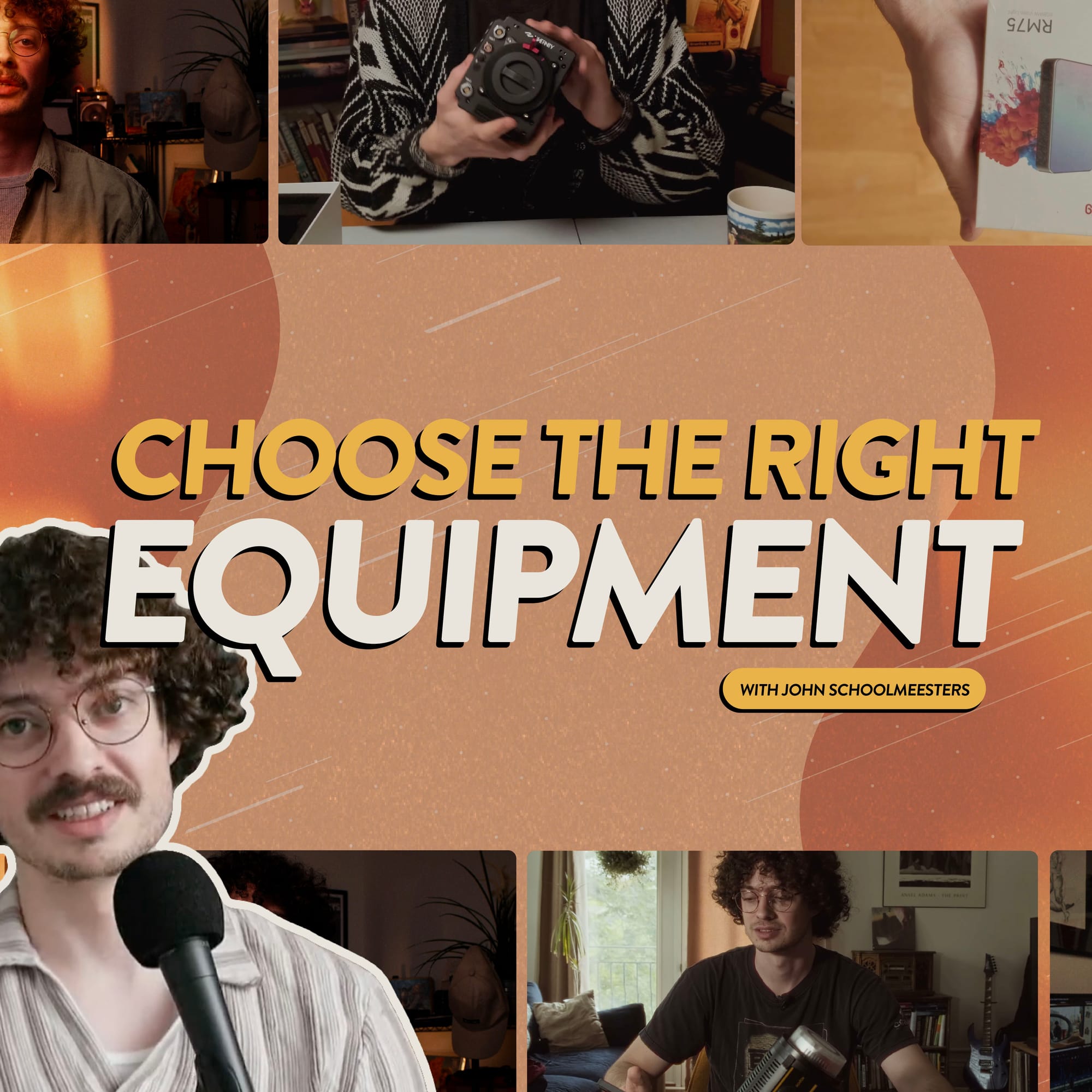
It’s easy to fall into the trap of buying new gear without stopping to think ‘do I really need it?’ Filmmaker John Schoolmeesters points out, you waste both time and money when you focus on gear too early: “People want to get better at making videos by buying things, but it doesn’t really work like that. You realise you’ve just bought a solution to a problem that didn’t exist.”
John’s own content stands out for its cinematic visuals and thoughtful storytelling, but he’s quick to point out that his setup wasn’t built overnight. Instead of chasing the latest set-up or a new camera, he recommends a slower, more practical approach. Simply learn what works for you and which gear will actually make a difference.
In this interview with Uppbeat, John breaks down his refreshingly honest approach to buying equipment. From what to ignore when you’re new, to the tools that are genuinely worth investing in. John’s advice is all about making gear work for you, not the other way around.
YouTuber John Schoolmeesters is a filmmaker known for his cinematic video essays and thoughtful storytelling. His channel blends film-inspired visuals, creative colour grading, and in-depth narrative structure, making him a go-to for creators who want to improve their craft.
- Better storytelling beats new gear
- Try before you buy!
- Improve your audio before anything else
- Start with free options where you can
- Invest in lenses over camera bodies
- Quality lighting lasts a long time

1. Great storytelling beats fancy equipment every time
In your early days as a creator, John says gear should be the last thing you worry about. Building your skills as a creator will take you further than any piece of equipment. And one of the most important tools you have is your ability to share a story with your viewers.
JS: “You shouldn't place any importance on the actual equipment you have when you're just starting out. It's way more important to get experience telling a story and build experience talking to a camera.”
John believes gear only starts to matter when your current setup is holding you back.
In other words, don’t upgrade because a new camera looks cool – upgrade when you can see and hear the difference it makes.
JS: “There’s more equipment to choose from than ever and most of it is really good. But you should only look into upgrading when you can tell the difference it’ll make to your videos, whether that’s investing in your mic, your camera, or anything else.”
John even points out that his own setup isn’t cutting-edge. He still uses a camera from 2017 for certain shots because it gives him a unique, textured look.
JS: “I still use my old Fujifilm XT3 for a lot of stuff and, honestly, nobody watching would know. It’s more about how you shoot with it than what year it came out.”
John’s Key Takeaway:
Don’t chase new gear. Build your storytelling skills first, then upgrade when you feel that your current setup limits your creative vision.

2. Try before you buy if you can
John knows firsthand how easy it is to get caught up in imagining how a new piece of gear might ‘fix’ your setup. That’s why his golden rule for buying equipment is simple, try it out first if you can!
JS: “Rent things, try them out. It's annoying when you have to pay for a rental, but it will probably save you money in the long run when you realize, ‘I don’t actually need that.’”
“It's really easy to imagine how helpful something will be before you use it and then it doesn’t work the way you want it to.”
This approach has helped John stay focused on what actually improves his work and avoid collecting expensive tools that gather dust. And it’s a mindset that applies to creative assets too. You’ll find thousands of great tracks, sound effects and motion graphics in Uppbeat’s library you can safely use in your videos for free.
John’s Key Takeaway:
Test equipment before committing. A short rental can save you from a long list of expensive mistakes.

3. Audio quality is more noticeable than visuals
For John, good audio isn’t a nice-to-have, it’s essential. You might be able to get away with average footage, but if your sound is harsh, echoey or hard to hear, people will leave your content.
That’s why John recommends finding a quiet space where you can record strong audio without distracting echoes or background noise. Once you have basic sound quality nailed down, you can start thinking about what type of microphone will complement your voice.
“One really important thing with audio is how your voice sounds. Everyone’s voice is different, so a microphone that sounds amazing for one person might not sound super great for you.”
“Spend time experimenting and find something you think sounds good in your voice. It’s already hard enough to listen to your own voice, but making it sound nice is going to help you a lot.”
Spend time testing your audio setup and listening back until you find a sound that feels natural. Because ultimately, audio is often what makes or breaks a video.
John’s Key Takeaway:
Good sound might not necessarily keep people watching, but poor audio will cause them to leave. Take the time to get it right for your voice and space.

4. Start with the best free software available
Just like his approach to gear, John believes in getting the most out of what’s free before spending a cent. And for video editing, there’s one clear winner.
JS: “The first thing that I tell people when they ask me about color grading is to download DaVinci Resolve. It’s the best tool.”
John praises DaVinci Resolve for being both professional-grade and accessible, making it ideal for beginners who want to learn without investing in expensive subscriptions.
JS: “There’s zero barrier to entry. They have a free version that you can learn just about everything from, and it’s used by the actual film industry. It’s a unique tool where it will grow with you. As you get more experienced, new parts of it will almost be unlocked for you.”
Tempted to download this great piece of kit but not sure where to begin? We break down what you need to get started in our guide on how to use DaVinci Resolve. And once you’re set up, explore Uppbeat’s collection of motion graphics for DaVinci Resolve, so you can start creating polished, professional-looking content straight away.
John’s Key Takeaway:
Start with free, professional tools that help you grow. Resolve gives you everything you need without the price tag.

5. Buy camera lenses over expensive new cameras
When it comes to spending serious money on gear, John believes there’s one investment that consistently pays off – lenses. They’re not only more durable than camera bodies, but they often turn out to be a better financial choice too.
JS: “The camera you choose is less about the camera itself and more about the lenses. Lenses will hold their value way more than anything else.
JS: “A camera, the instant you buy it, it loses half its value. Whereas a lens will sometimes increase in value. So investing in that over a camera is probably better.”
When you buy a well-made lens, particularly from a high quality brand, you’ll often find it holds its price or even becomes more valuable. But it isn’t just resale potential that makes lenses a smart purchase.
Lenses shape the entire feel of a shot, from how light interacts with the image to how much depth and character your footage has. Where a camera might quietly improve your resolution, a lens can define your visual style.
John’s Key Takeaway:
Invest in the equipment that counts the most. Quality lenses will shape your image and outlast every camera you own.

6. Invest in quality lighting built to last
If there’s one area where John thinks it’s worth spending a little extra early on, it’s lighting. Good lights can last years, or even decades, if you buy wisely.
JS: “Lighting is a really important piece of equipment, so investing in quality lighting is always worthwhile.”
To prove his point, John shares how he doesn’t tend to use newer LED lighting for filming. The lighting equipment he’s had for years is as reliable as it’s ever been.
JS: “I still use old hot lights – lights with actual bulbs in them – and they still work great. They do exactly what I need them to do.”
For John, lighting is about reliability and versatility. One good light can work across years of projects, making it one of the best long-term gear investments a creator can make.
John’s Key Takeaway:
Buy lighting that lasts. A solid setup today will keep working for years to come.

The right gear is whatever works for you
You don’t need the newest, most expensive kit to create your best work, just the right tools for where you are now. John’s advice strips away the pressure to keep upgrading and reminds us that great content starts with strong storytelling, not a fancy setup.
That same thoughtful approach extends into John’s approach to editing and color grading. If you want to hear how you can find your visual style, check out our interview with John on how to approach color grading.