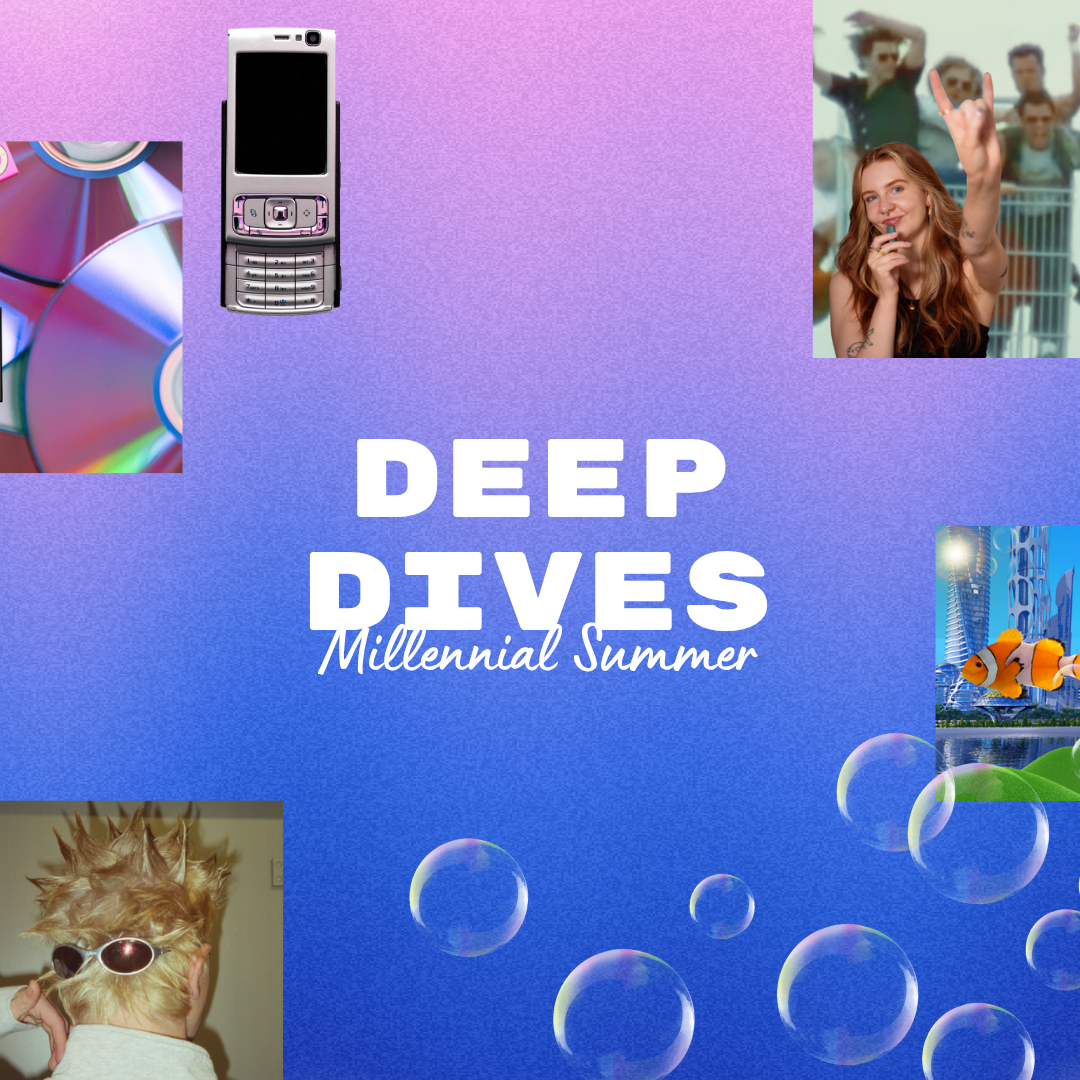
If 2025 was the year of nostalgia, then 2026 is the year we finally do something about it.
From pop-punk and grainy camcorder footage to customized iPods, glassmorphism and the return of Jackass, we’re not looking into the past just for the sake of it. We’re craving a version of creativity that feels freer, weirder and a hell of a lot more human.
After years of chasing those oh-so-unpredictable algorithms, fighting AI slop and polished feeds, we’re realising the goal isn’t perfection, but creating content that feels genuine and human.
Now, this isn't about ditching technology or pretending it's still 2006 (although I kinda wish it were). It's about taking back control of the internet, embracing the messy bits that make our content memorable, and creating things that people truly connect with.
So grab your jorts, dust off your old iPod and prepare to relive your emo phase as we dive into the trends behind this year's biggest creative shifts.

The Y2K Revival: It’s not a phase, mom!
If you've been chronically online over the past couple of months, you will have heard Dexter and the Moonrocks' 'Freakin' Out' played on loop across your feeds, inspiring a generation of Y2K sleeper agents ‘remembering who they are’. The trend took off by tapping into something people were craving: a freeing teen-like Y2K nostalgia. Think Xbox loading screens, nu-metal and pop punk music videos, camcorder footage and just a sprinkle of guy-liner.
The DNA these clips share all boil down to people doing their own thing, in their own way. We crave the things that feel anti-establishment, emotionally raw, nostalgic and unpolished, as it reminds us of something real. Which is exactly why the trend took over our feeds.
Now, I’m far from the first to point out that we're living in an era of overproduced content, chasing sounds and aesthetics that are already on their way out by the time you've perfected them. 'Freakin' Out' went viral not because it was new, but because it reminded us what it felt like to just make something based on authenticity and feeling - it’s really not a phase, mom!
With the Y2K revival, Jackass: Best and Last hitting cinemas this summer feels perfectly timed. They were the greatest example of what the ‘Remember who you are’ trend was calling us back to - they rose to stardom by going against what ‘worked’ in an era of competing content on cable TV by literally pointing a camera at their friends and being the butts of their own jokes. Their stunts and other ‘stupid stuff’ found their cult audience and subsequently broke MTV’s Sunday night ratings, and if that isn’t a lesson on how authenticity can bring in success, I don’t know what is.
Oh, and if you want that grungy Y2K look that changed the entertainment industry forever? Check out our Jackass-inspired board, full of VHS overlays, LUTs, skatepark bangers and more.

Taking back control of technology
Whilst the beginning of this year saw the rise of the analog trend, we know tech isn't going anywhere. Sure, it was fun watching people carefully curate the contents of their ‘analog bags’ and swap doomscrolling for sudoku, but when the movement itself started going viral online, it became clear that we weren’t really leaving the web.
What it did highlight, however, was that the issue wasn’t necessarily tech, but the lack of control we had over it.
We don't hate our devices, but we do hate being force-fed content we didn't ask for, surrendering our attention to algorithms, and renting access to media that we don't truly own. So instead of rejecting technology altogether, creators have started reshaping it into something that feels more intentional, and if nostalgia has anything to do with it, you know we’re going back to basics.
Throughout 2026, creators have been documenting themselves modding old iPods, restoring Nintendo DS consoles, rebuilding DVD and CD collections, and even creating custom music players from scratch. What once felt like niche internet hobbies have become symbols of something much bigger: the ownership, customisation, and creative freedom we all crave.
Despite having every song, film and TV show imaginable at our fingertips, 2026 is proving that convenience isn't always enough. Rising subscription costs, endless advertising, and the growing realization that we don't actually own much of the content we pay for have left many people feeling disconnected from the digital experiences that were supposed to make life easier, which is where the appeal of older technology and customisation comes into play.
For creators, the takeaway isn't necessarily that you need to throw your smartphone in a drawer and start strictly filming on a camcorder (though creators like Struthless and c.q. lucius do this, and it looks pretty damn cool), it's that audiences are increasingly drawn to things that feel personal and intentional.
Polished perfection is dead and overrated, so don’t be afraid to inject some messy personality into your content. Try adding grungy overlays for a rough and ready feel, or colourful LUTs that reflect the energy of your video. And if you need a soundtrack bespoke to you, describe your personality to Uppbeat’s playlist generator to create a unique playlist that reflects you, and you only.

The return of Frutiger Aero
What would a millennial summer be without Windows Vista? Okay, maybe not Windows Vista itself. But the internet aesthetic that came with it is making a very shiny comeback.
After years of Corporate Memphis illustrations, flat logos and ultra-minimal interfaces dominating our screens, people have started craving something that feels a little more... alive.
Gen Z and millennials grew up believing the future would be glossy, colourful and potentially have a lot more flying fish around our cityscapes. We were raised on floating bubbles, glowing buttons, blue and green hues, shining synths and acoustic textures that harmoniously blended nature and tech, creating digital worlds that felt like you could actually reach out and touch them.
But instead, we got lifeless two-dimensional icons that just felt… soulless.
So when Frutiger Aero started resurfacing across TikTok, Pinterest and YouTube, it wasn't just another nostalgic trend popping up, but instead, masses of people mourning an internet that felt optimistic and playful. And who would have thought that the tech giants were actually paying attention?
Apple, Microsoft and Google have all started embracing softer, more tactile interfaces, with glassmorphism becoming the modern evolution of Frutiger Aero in a bid to make digital spaces feel physical again.
We're already seeing it show up through frosted overlays, glossy 3D text, reflective surfaces, blue-hued lighting and layered graphics that make videos feel immersive rather than simply just edited. Not because people suddenly want to use Windows Vista again (well in my case, I kinda do), but because we’re craving digital experiences that feel real as opposed to something just displayed on a screen.

Embrace the imperfect, it's what makes content human
The takeaway here isn’t necessarily a shared desire to go backwards, but to create with a little more intention. To make things that feel personal instead of perfect, to choose creativity over conformity, and to remember that the content people connect with most is usually something that feels, simply put, human. Don’t be afraid to lean into your authenticity and make something that only you could make.
Now go crank up your favourite Limp Bizkit album, pop on a pair of jorts and enjoy your millennial summer. Midwest emo autumn, anyone?