"The best creators constantly reinvent who they are without forgetting where they come from."
Most creator advice is about the practical side of content: better hooks, tighter editing, a schedule you can actually stick to. But advice like this doesn’t take into account what you – the creator – actually aim for when making content. Or rather, how you define success.
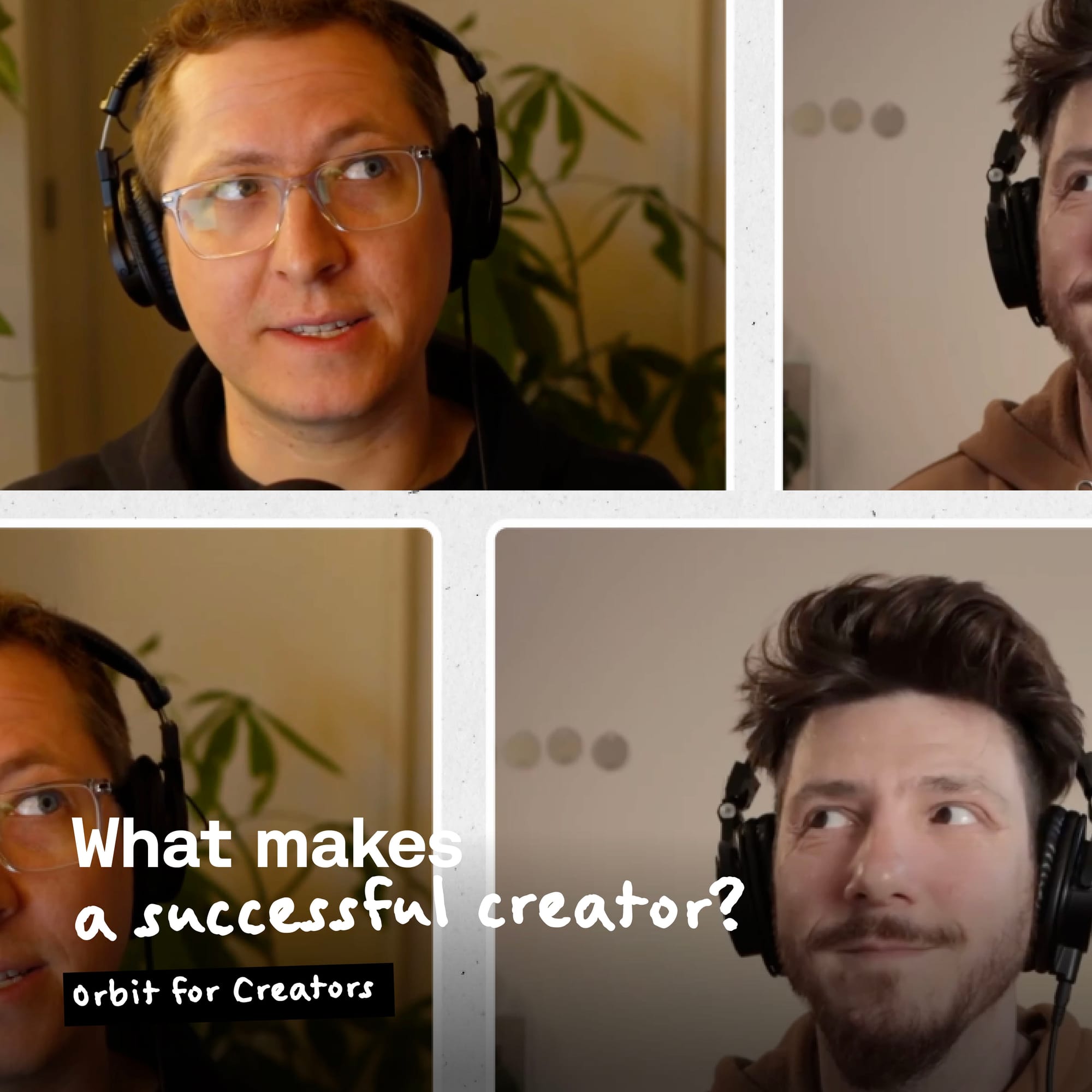
Valentin Farkasch has spent years speaking to other independent creators on his podcast, Orbit for Creators, about their definitions of creative success, most of which rarely mention the quality of the videos themselves. Valentin’s podcasts reveal what it takes to stick around as a creator and reach the goals you set for yourself. More often it’s about being clear on what you want to achieve than any single growth hack.
In this Uppbeat interview, Valentin breaks down what he's learned about defining success on your own terms – from knowing when to ignore standard creator advice, to getting specific enough about your audience that you could describe them as people instead of numbers on a dashboard.
Former filmmaker and marketer Valentin Farkasch runs Orbit For Creators, a podcast that explores what it actually takes to succeed as an independent creator today, from getting your first brand deal to building a sustainable business on your own terms. You can find Orbit For Creators on YouTube and Spotify.
- Define success before you chase it
- Treat the business side like part of the craft
- Know your own format
- Keep checking in that you're on the right path
- Tone matters more than timing
- Know exactly who you're creating for

1. Define success for you before chasing it
It’s easy to think of creator success in terms of numbers. And whilst Valentin doesn't dismiss the importance of growing your vital stats, when he talks to creators who've actually built lasting careers, a different definition comes up more often.
Valentin: “Success for creators is very often measured in views, audience size, or even revenue. But for myself and most creators I talk with, success really comes in the form of time freedom: being able to spend your days in a way you enjoy, with flexibility in your life. Not a rigid schedule, not specific deadlines, not being tied to a location or a team.”
That flexibility doesn't mean you need to build a self-sustaining business empire, either. Valentin has watched enough of his peers go down that road to know it isn't the only way, or even the most common one among the creators he admires.
VF: “There's often this narrative that in order to achieve ‘freedom’ as a creator, you need to build a team and almost remove yourself from the content process completely. But that then comes with all the responsibility of managing a team and other people's livelihoods, not just your own.”
VF: “The creators I talk with most are mostly living this lifestyle of self-determination – working alone, or in a very small team of two or three people – and that's okay.
Valentin's Key Takeaway: Before you chase growth for growth's sake, get honest about what you actually want your days to look like. A smaller, self-directed creative life still counts as a win – you don't need a team or a seven-figure business plan to prove it.

2. Treat the business side like part of the craft
It's tempting to treat the business side of content creation as something that kicks in only once the audience is already there. But if you want to make being a creator pay, Valentin suggests adopting a business mindset as early as possible.
VF: “As an independent solo creator, you have to wear a lot of different hats. Being creative and being business-minded are two very different areas you have to be equally good at, constantly improving both. There's an endless number of creators who built up an audience, thought ‘I'm set,’ and then just faded away.”
Staying in the game means being willing to evolve as a creator. But Valentin also points to a common misconception that stops a lot of would-be creators before they've even started.
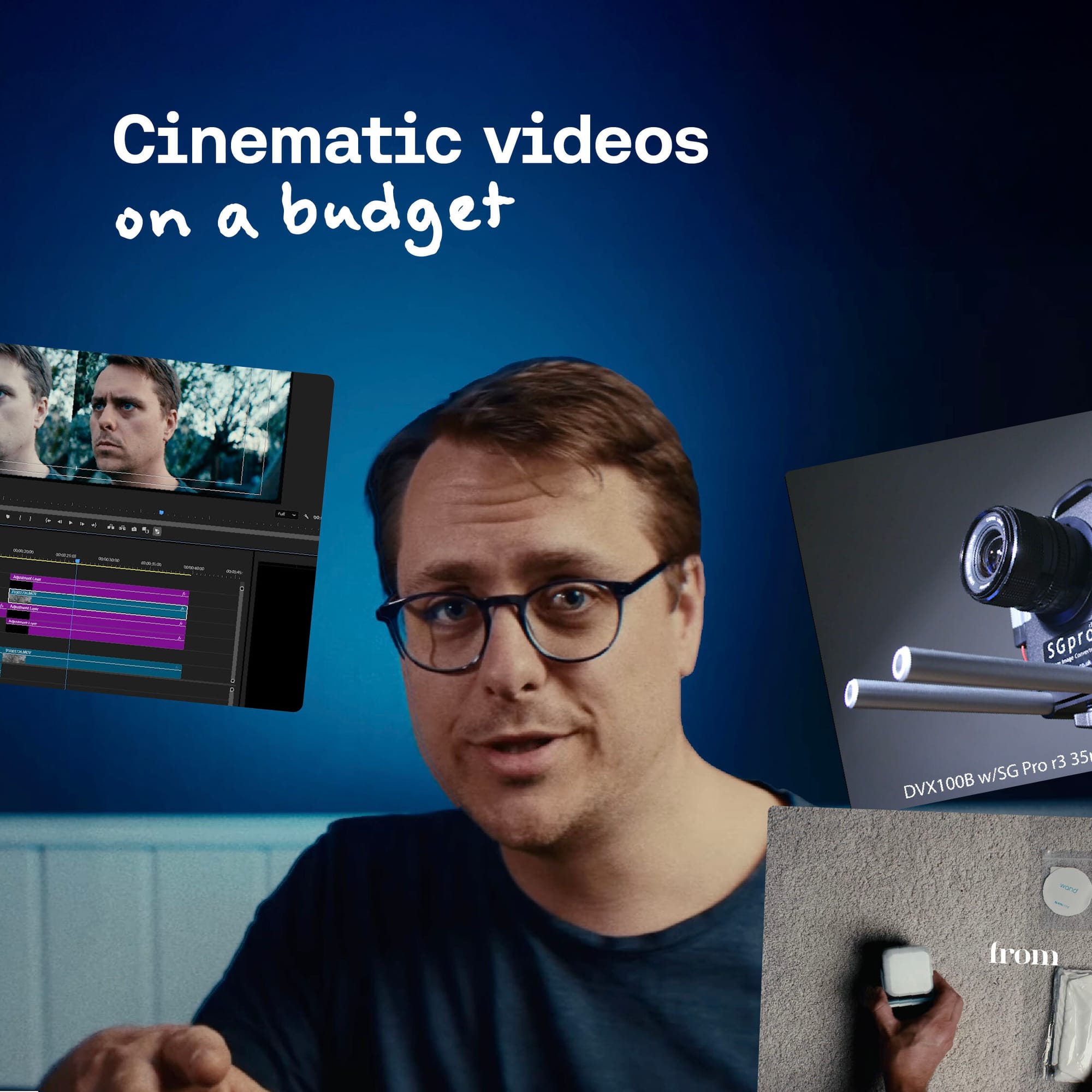
VF: “A common hurdle when people want to become YouTubers is thinking they need a huge budget to do Mr. Beast-style production. That couldn't be further from the truth – Mr Beast himself started with absolutely nothing, sitting in his bedroom.”
VF: “The most interesting creators I see right now are doing things that are almost a side product of their regular life: filming their day-to-day experience and building a story around it, almost going back to that vintage YouTube vlog format, but with a bit more polish and narrative.”
This nostalgic, paired-back trend rewards substance over budget. In short, a well-told story shot on a phone, with good audio and music, usually beats a glossy video with nothing to say.
Valentin's Key Takeaway: Don't treat the creative and business sides of your channel as two separate jobs – they're one job. And don't assume “better” means “more expensive” either. Some of the most interesting creators right now are succeeding by doing less, not more.

3. Know the formats that work for you
Every creator hears the same advice about which formats to chase. Usually that’s short-form content on platforms like TikTok and Instagram, because that's supposed to be where the growth is. But Valentin has ignored this advice for years, and on purpose.
VF: “Everybody who tells you how to grow on social media says you've got to put out a bunch of Reels. I've tried it many times, but short-form content is just not something I enjoy creating. I could spend my days making short-form and maybe have ten times the audience I have now, but it's just not something I enjoy, and it would have made me dislike my work.”
Passion is what gets most creators started, but it's fragile. The moment a format feels like a job rather than a craft, the enjoyment that pulled you in can disappear fast. Valentin avoids this by only working in a format he genuinely understands.
You can still evolve your content over time. What matters most is being honest about which formats you can actually sustain, even when that means a smaller audience.
Valentin's Key Takeaway: Growth tactics that work for someone else aren't automatically worth adopting. If a format doesn't feel like you, it will be exhausting to sustain, no matter how well it performs.

4. Keep checking in with yourself
When you work alone, no one's going to tap you on the shoulder and ask whether you're still making the thing you actually set out to make. Valentin builds that question into his process himself.
Valentin: “Paying attention to what's authentically you and how you'd like to spend your time, is really important. You need regular check-in points to see if what you're doing is still the right thing.”
Self-reflection rarely happens on its own. You have to build it into your routine, especially when there's no one else around to raise the question for you.
VF: “If you work alone, you have to give yourself the space to question what you're doing. If you don't, it's very easy to end up in a corner of the internet you don't want to spend time in – everything optimized to a point where it works, but it doesn't actually feed your soul.”
Most creator advice treats showing up consistently and staying true to yourself as the same thing. In practice, staying consistent can be exactly what quietly pulls you away from the content you meant to create.
Valentin's Key Takeaway: Schedule time to ask yourself whether your content still reflects what you want to make, not just what's working. Regular reflection is what keeps a creative career from quietly drifting somewhere you never meant to go.

5. Tone and emotion matter more than timing
It's easy to believe that sticking to a schedule is everything; that if you skip a week, you'll lose the audience you've spent months building. Valentin believed this too, until his own schedule fell apart and taught him something different.
VF: “The most basic, common creator advice is to publish consistently – every day, once a week, whatever the cadence is. That worked a few years ago, and it probably still works to an extent. But what's way more important than a consistent schedule is a consistent tone of voice, and a consistent emotion that people feel when they interact with you.”
Valentin got to test this theory himself this year when a house move delayed his uploads by a month.
VF: “I was really stressed out at one point about messing up my own schedule. Then a friend asked me: what's more important – that you make videos that fulfill their purpose, or that they come out on a specific day? These videos have a job to do. It really doesn't matter if they come out in February or March.”
It's a belief that's been tested by more than just his own schedule slipping. When creators take unplanned breaks, for any reason, Valentin has noticed the audience doesn't usually vanish – it waits, and it notices the difference between content made with care and content rushed out to hit a date.
VF: “The audience is smarter than most people give them credit for. You might think you have to upload this week or you'll lose your audience – but people can tell when it's a half-hearted video, and you might do more damage with that than good.”
Valentin's Key Takeaway: A missed upload date is rarely the thing that costs you your audience – a video that feels rushed or hollow is. If you have to choose between hitting a deadline and making something you're proud of, your audience will wait for the second one.

6. Know exactly who you're making it for
Open your own analytics dashboard and it'll tell you plenty – for example, age range, gender split and top countries – but take them with a grain of salt. It's easy to mistake understanding your data for actually knowing your audience, a mistake that Valentin trips up lots of creators.
Valentin: "You wouldn't believe how many successful creators can't actually answer who their audience is. There's a dashboard: '50% male, from these countries, likes this kind of content.' That's factually true, but it's not the same as knowing who those people actually are, and why they watch."
That kind of clarity about an audience doesn't happen by accident – it starts with being just as clear about why you're making videos in the first place.
VF: "What do you actually want to say? If you don't have something to say, go do something else – we're drowning in content. And who do you want to reach? Get super specific about the people you want to talk to, because once you know that, everything else gets easier."
If you want to go deeper on how to build that kind of relationship with your audience, Arnaud's lessons on how to grow your audience are a good next read.
Valentin's Key Takeaway: Knowing your audience as people, not just numbers on a dashboard, is what lets you evolve your content without losing them. Get specific enough that you could describe a single viewer, not just a demographic.

There's no single formula for success
Taken together, these six lessons come down to defining success your own wayThat could be working in a format you actually enjoy, or fully understanding your ‘why’ for making content, before you even pick up the camera. Doing that is what keeps a creative career sustainable long after the motivation that started it fades.
If time freedom and work-life balance is the piece of this that resonates most, our guide on how to balance life as a creator in 2026 picks up that thread in more detail. And whatever format you land on – long-form storytelling, a vlog, or something in between – Uppbeat's music library is there to help the finished video sound as considered as the thinking that went into it.